
Get Cedar Trees Trimmed Right: What Actually Matters
Short answer: Trim cedar trees in late winter for routine shaping, and inspect for rust galls in late winter or early spring before the orange, gelatinous spore horns emerge. Prune those galls out by around April 1 if you can [S1][S2].
The CompareTreeServices Take
Free estimates make homeowners lazy and crews vague. Use this guide to arrive specific: a crew that hears exact scope gives an exact number, and exact numbers are comparable.
| Job | Timing | Why |
|---|---|---|
| Routine shaping and size control | Late winter to early spring | Cedar handles pruning well outside active growth |
| Cedar-apple rust gall removal | Late winter to early spring, before spore horns form | Galls release spores that infect nearby apple and crabapple trees |
| Bagworm bag removal | As soon as bags are spotted | Hand-picking bags or spraying Bacillus thuringiensis controls light infestations directly |
| Dead or storm-damaged limbs | Any time | Hazard removal overrides the routine calendar |
Sources for this table: S1, S2, S3, S4 in the Sources list below.
Table of Contents
Why cedar-apple rust hijacks the pruning calendar
Cedar-apple rust is caused by a fungus that needs both a cedar (or juniper) and an apple-family tree to complete its life cycle. On cedar, the fungus forms brown, woody galls that swell through winter, and in wet spring weather those galls sprout bright orange, gelatinous spore horns that release spores carried by wind to nearby apple, crabapple, and hawthorn trees [S1][S2]. Iowa State University Extension recommends inspecting cedars in late winter or early spring and pruning out the galls before those spore horns form, generally by around April 1 in much of the Midwest, since that’s the narrow window before the fungus completes its spring cycle [S1].
The University of Minnesota’s plant pathology extension notes the reverse infection also happens: spores produced on infected apple leaves in summer travel back to cedar and start new galls there, meaning a rust problem on one species keeps reseeding the other year after year unless someone breaks the cycle [S2]. Pruning out visible cedar galls is the one intervention a homeowner can do directly, rather than relying on fungicide programs on the apple side alone.
Bagworms are a hand-removal problem
Bagworm caterpillars web foliage and debris together into bags up to about two inches long, then live inside them while feeding on cedar needles [S4]. UF/IFAS Extension recommends controlling a bagworm problem with sprays of Bacillus thuringiensis, or by picking the bags off the plant by hand, which works well for a light-to-moderate infestation without any chemical at all [S4]. A cedar with a heavy bagworm infestation left unaddressed can lose enough foliage over a couple of seasons to weaken the whole tree, so this isn’t purely cosmetic maintenance.
What routine cedar trimming looks like
Cedar tolerates pruning better than most conifers as long as you’re cutting live, green growth rather than into bare wood; unlike some evergreens, cedar generally won’t push new growth from wood that’s already lost its needles. Late winter into early spring is the standard window for shaping cuts and size control, before active spring growth begins [S1]. Disinfect pruning tools between cuts with 70 percent alcohol or a 10 percent bleach solution when you’re removing rust galls specifically, since the fungus can move between cuts on a contaminated blade the same way it moves through the air [S1][S2].
Full sun and good air circulation reduce both rust and bagworm pressure over time, and extension guidance is consistent that planting cedar well away from apples, crabapples, and hawthorns in the first place avoids the rust problem almost entirely rather than managing it every spring [S2][S3].
Cost and when to call a pro
Trimming cedar trees costs in line with other conifers of similar height, with access and canopy density setting the price more than the species itself. LawnStarter’s national pricing data shows denser evergreens generally running mid-range compared to hardwoods of the same height [S5]. See our tree trimming cost guide for a full breakdown by size and access.
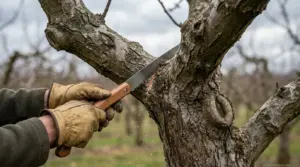
A young cedar under about 15 feet, with light shaping and hand-removable bagworm bags or rust galls, is a workable DIY job with pruners and a stepladder. A mature cedar over 30 feet, or one requiring a bucket truck to reach upper galls or bags, is worth handing to an insured crew, especially if it’s growing near a structure or power line.
Key takeaways
- Inspect cedar for rust galls in late winter or early spring, and prune them out before the orange spore horns appear, generally by around April 1.
- Cedar-apple rust needs both a cedar and an apple-family tree to complete its cycle; removing galls on one side interrupts it.
- Remove bagworm bags by hand as soon as you spot them, or treat light infestations with Bacillus thuringiensis.
- Disinfect pruning tools between cuts when removing rust galls to avoid spreading the fungus yourself.
- Planting cedar away from apples, crabapples, and hawthorns avoids the rust problem almost entirely.
Frequently asked questions
When is the best time to trim cedar trees?
Late winter to early spring, before active growth resumes, works for routine shaping [S1]. If you’re also removing cedar-apple rust galls, aim to finish before the orange spore horns emerge in spring, generally by around April 1 in much of the Midwest [S1].
What is cedar-apple rust and does pruning fix it?
It’s a fungus that alternates between cedar and apple-family trees to complete its life cycle, forming galls on cedar that release spores in spring [S1][S2]. Pruning out visible galls before they sprout spore horns interrupts that cycle on the cedar side, though nearby apple trees may still need their own treatment.
How do I get rid of bagworms on my cedar tree?
Pick the silk bags off by hand as soon as you spot them, or spray with Bacillus thuringiensis for a heavier infestation [S4]. Hand removal works well on its own for a light-to-moderate infestation.
Can cedar-apple rust kill my cedar tree?
Rarely on its own; the galls are usually more of a threat to nearby apple and crabapple trees than to the cedar itself. A heavily infested cedar can look unsightly and lose some vigor, but severe dieback from rust alone is uncommon [S2].
Should I plant cedar near my apple trees?
Extension guidance generally advises against it, since cedar and apple-family trees complete cedar-apple rust’s life cycle together [S2][S3]. Keeping the two well separated avoids the reinfection cycle almost entirely.
How much does trimming cedar trees cost?
Pricing follows the usual drivers, height, canopy density, and access, and runs in line with other conifers of similar size. See our tree trimming cost guide for a full breakdown [S5].
A crew handling a mature cedar, especially one requiring bucket-truck access for upper-canopy gall or bagworm removal, should carry a certificate of insurance covering general liability and workers’ comp. Confirm cuts follow ANSI A300 pruning standards and that the crew works under ANSI Z133 safety rules before anyone climbs.
How we built this guide
Rust guidance here comes from Iowa State University Extension and University of Minnesota Extension plant pathology, cross-checked since cedar-apple rust’s fungal life cycle is well documented and consistent across the Midwest and mid-Atlantic regions where the disease is common; bagworm control guidance comes from UF/IFAS Extension. This guide cites 5 sources, , reviewed by the CompareTreeServices editorial team.
Trimming cedar trees rarely requires the same danger-window thinking as oak or elm, but rust season is the one exception worth marking on a calendar. Catch the galls in late winter, remove bagworm bags before they hatch, and routine cedar care stays about as simple as conifer maintenance gets.
Sources
- [S1] Cedar-Apple Rust, Iowa State University Extension, Yard and Garden
- [S2] Cedar-apple rust and related rust diseases, University of Minnesota Extension
- [S3] Gymnosporangium Rusts (Cedar-Apple Rusts), Wisconsin Horticulture
- [S4] Juniperus virginiana: Southern Redcedar, UF/IFAS Extension, University of Florida
- [S5] Pricing Guide: How Much Does Tree Trimming Cost?, LawnStarter
About this guide
Researched and maintained by the CompareTreeServices editorial team, alongside the public Google Business data behind our tracked directory. How the numbers are built: methodology · listing standards.