
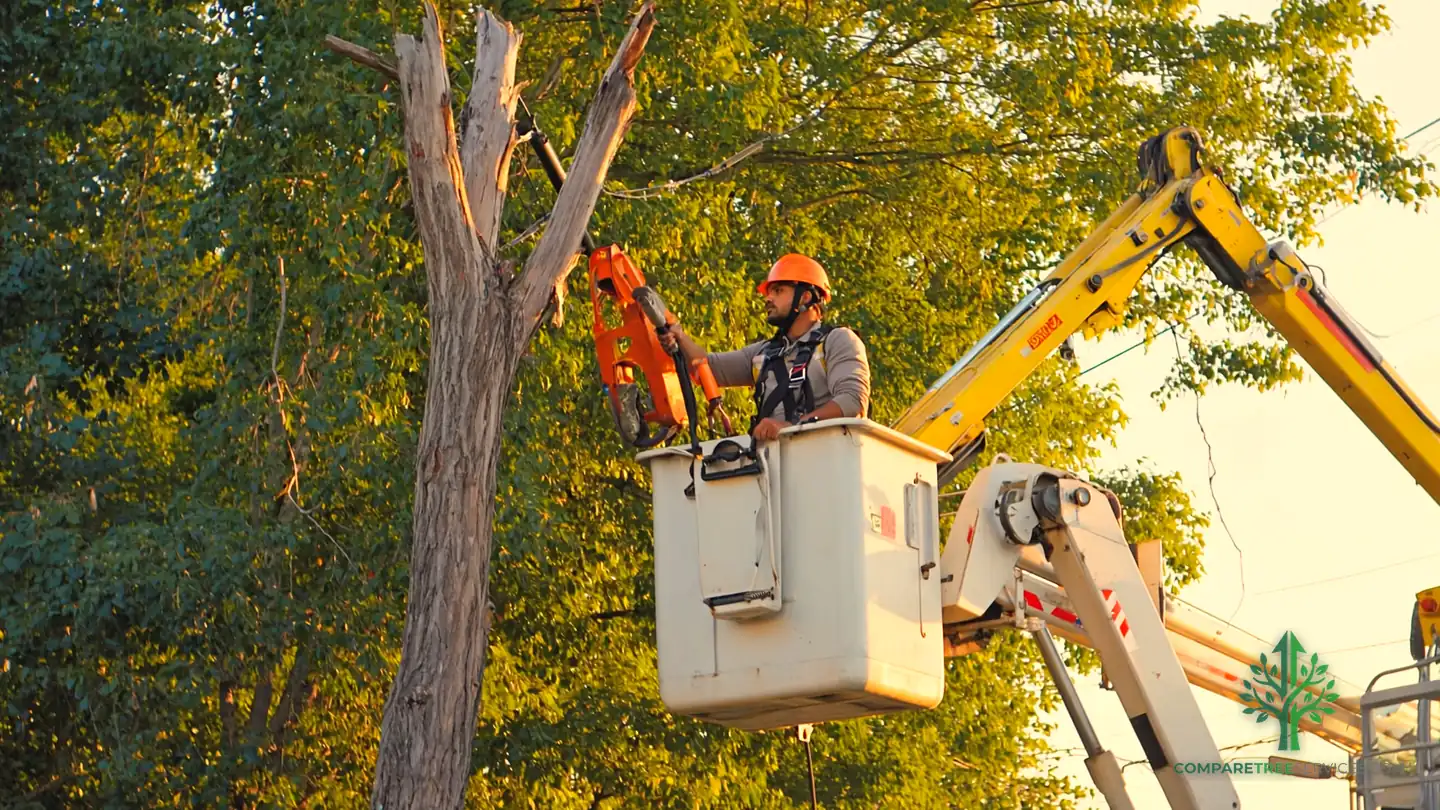
Tree Removal Cost in 2026: What You’ll Actually Pay
Tree removal cost depends mostly on three things: how tall the tree is, how thick the trunk is, and how hard the crew has to work to get it down safely. A small dead tree in an open yard costs far less than an 80-foot oak leaning over your roof. This guide breaks down what drives the price so you can spot a fair quote. Just need the tree felled? See our narrower tree cutting service cost guide instead.
Short answer: Most tree removal jobs cost $400 to $1,900, with a national average of roughly $750 [S1][S6]. Height and trunk diameter set the baseline price; site access, being close to a house, fence, or power line, is most likely to push a quote higher [S2].
Tree Removal Cost in 2026: What You’ll Actually Pay
Tree size
Height
Typical cost
What drives it
Small
Under 30 ft
$150 to $450
Open access, no rigging needed [S2][S4]
Medium
30 to 60 ft
$450 to $1,200
Crew size, canopy spread [S2][S4][S6]
Large
60 to 80 ft
$800 to $1,500
Rigging time, possible crane [S2][S4][S6]
Very large
80 ft or more
$1,000 to $2,000 base, plus $500 to $600/day for a crane if one’s needed
This Old House’s published bracket, with crane priced as its own line item, not baked in [S4][S6]; see large tree removal
Oak (any size)
Varies
$200 to $2,000
Dense hardwood, heavy limb loads [S3][S4]
Pine (any size)
Varies
$250 to $1,500
Height and brittle wood [S3][S4]
Palm (any size)
Varies
$150 to $1,500
Fibrous trunk, specialty equipment [S3][S4]
Tree Size Is the Biggest Factor
Height sets the floor for tree removal prices before anything else. LawnStarter puts the national average at $630, or about $10 to $14 per foot of height [S3]. HomeGuide and This Old House show the same pattern: cost climbs with every size bracket, from under $450 for a small tree to $1,000 to $2,000 past 80 feet before any crane add-on [S2][S4]. Homewyse’s calculator prices a typical basic removal at $614 to $750 before site adjustments, matching those averages [S5].
Trunk diameter matters almost as much as height. A short tree with a wide trunk can cost more than a tall, skinny one, since the crew cuts and hauls more wood either way.
Species Changes the Price Too
Wood density moves the number even at the same height. Oak is dense hardwood with heavy limbs that take longer to rig down per foot than pine, but height compounds the total: LawnStarter’s species averages actually run pine higher overall, $925 versus $775, since pine trees commonly grow taller [S3]. Palm looks simple and often is, but the fibrous trunk dulls chainsaw chains fast, and some crews price in the extra equipment [S3][S4]. Maple sits at the high end: This Old House prices a mature maple removal at up to $2,000 [S4]. Our maple tree removal cost guide covers why.
Access and Site Conditions
A tree in an open backyard is a different job than one wedged between a fence, a shed, and a power line. HomeGuide found that a hard-to-access tree can add up to 50 percent to the bill [S2]. Tight jobs call for rigging, lowering cut sections with ropes instead of a straight drop, which takes more time and people.
Once a tree tops 80 feet or has no safe drop zone, crews bring in a crane. HomeAdvisor puts crane rental at $500 to $600 a day, pushing a complex job to $6,000 to $7,000 total [S6]. Near buried utility lines, call 811 before any digging, including stump removal. It’s free, and it’s the law nationwide.
Tree Condition and Emergency Removal Cost
A dead, diseased, or storm-damaged tree can cost more to remove than a healthy one; This Old House notes a compromised tree’s awkward position and hidden decay often add labor [S4]. A tree already down is the exception, it’s often cheaper to handle than one still standing, since LawnStarter prices fallen tree removal at $85 to $300 on average [S3].
This Old House puts emergency tree removal cost as high as $5,000 in urgent cases, since crews charge a premium for after-hours dispatch and rushed scheduling [S4]. A tree actively leaning on your house or blocking your only exit is an emergency job; see our emergency tree removal cost guide for details.
Where You Live Changes the Number
Regional labor rates and demand shift the average up or down. Angi puts the regional range at $450 to $1,100 [S1]. Storm-prone regions and ice-storm belts tend to run higher; rural markets with more competing crews tend to run lower. Clearing several trees off a lot at once is usually priced per acre, not per tree. See land clearing cost for that math. If curb appeal, not a hazard, is the real reason you’re calling, our tree removal and property value guide covers when removal helps resale value.
Want a number specific to your tree instead of a range? Our tree removal cost calculator uses height, species, and location to build a working estimate.
What Add-On Services Cost
Removal is rarely the only line item. Stump grinding and full stump removal are priced separately from the tree itself. Here’s what typically gets added:
What Add-On Services Cost
Add-on
Typical price
Stump grinding
$2 to $5 per inch of stump diameter, about $131 to $450 per stump [S3][S7]
Full stump removal (grinding plus roots)
$175 to $516, avg $326 [S3]
Hauling the wood away
$50 to $90 [S3]
Running it through a chipper
$65 to $125 [S3]
Splitting into firewood
$50 to $90 [S3]
Tree removal permit
Set by your city; often waived for hazard trees [S4]
Crane rental (large or tight-access jobs)
$500 to $600 per day [S6]
Emergency or after-hours premium
Up to $5,000 total for an urgent job [S4]
How to Save Money on Tree Removal
Money-saving moves that actually work here:
- Bundle stump grinding with the removal instead of scheduling a separate visit; most crews charge less to do both in one trip.
- Keep the wood yourself and skip the $50 to $90 hauling fee if you’ve got a fireplace or a splitter [S3].
- Check whether tree trimming solves the problem first; a crown reduction sometimes fixes a leaning limb for less.
- Get three quotes, not one; prices for the same tree vary by hundreds of dollars between companies.
- Book outside spring and post-storm weeks; see our best time of year for tree removal guide for why.
- If your city requires a permit for large or protected trees, confirm the fee and any heritage-tree exceptions with your planning department first [S4].
DIY vs. Hiring a Pro
Some tree work is fine to do yourself. A small, dead sapling under about 15 feet, clear of structures and lines, with an open fall path, is a reasonable DIY job with basic safety gear. Light pruning on a small ornamental tree is fine too.
Everything else goes to a licensed crew. Any tree near a structure, fence line, or power lines needs rigging or a crane; one wrong cut can bring a limb down on you, your house, or the line itself. Full removal, cabling and bracing, and anything needing a bucket truck are pro-only jobs, full stop. Digging for a stump afterward still means calling 811 first.
Getting Quotes from Vetted Pros
Ask every bidder for a certificate of insurance covering general liability and workers’ comp before price even enters the conversation. Then confirm the lead climber’s credentials, ideally an ISA Certified Arborist; a legitimate company won’t hesitate to hand over that paperwork.
We’ve already run every pro in our directory through our vetting standards, so you’re choosing between qualified crews instead of screening out the ones who shouldn’t be on your property.
Key Takeaways
- Most homeowners pay $400 to $1,900 to remove a tree, with a national average near $750 [S1][S6].
- Height and trunk diameter set the baseline price; hard access can add up to 50 percent on top [S2].
- Stump grinding is priced separately, usually $2 to $5 per inch of stump diameter [S3][S7].
- Emergency or after-hours removal can run as high as $5,000 in urgent cases [S4].
- Always confirm a certificate of insurance and an ISA Certified Arborist credential before you sign anything.
## Frequently Asked Questions About Tree Removal Costs ### How much does it cost to remove a tree?
The average tree removal cost nationally is about $750, though most jobs land between $400 and $1,900 [S1][S6]. Small trees under 30 feet often come in under $450; large trees over 80 feet run $1,000 to $2,000, plus $500 to $600 a day if a crane is involved [S2][S4][S6].
What’s the average cost to cut down a large tree?
A large tree, 60 to 80 feet, costs $800 to $1,500 to cut down [S2][S4]. Over 80 feet runs $1,000 to $2,000, plus $500 to $600 a day for a crane if one’s needed [S4][S6].
Do I need a permit to remove a tree?
It depends on your city and the tree’s size and species. Many municipalities require a permit past a certain trunk diameter, or for a heritage or protected tree [S4]. Fees are set locally and some cities waive them for hazard trees, so check with your planning department before scheduling the job.
How much more does emergency tree removal cost?
Emergency and after-hours jobs cost noticeably more than a scheduled removal. This Old House puts urgent tree removal as high as $5,000, since crews charge a premium for rushed scheduling and after-hours dispatch [S4]. If a fallen tree isn’t blocking anything critical, waiting a day or two for a standard appointment usually costs less.
Is tree removal covered by homeowners insurance?
Often, yes, if a storm or other covered peril drops a tree on your house, garage, or fence. This Old House notes most homeowners insurance policies cover tree removal under those conditions [S4]. Coverage is less reliable for a tree that falls without damaging anything, so call your insurer first.
Can I remove a small tree myself?
A small, dead tree, well under 20 feet, clear of structures and power lines, with an open path to fall, is a reasonable DIY job for someone comfortable with a chainsaw. Anything larger, leaning toward a structure, or anywhere near power lines should go to a licensed crew. Call 811 before any digging, including stump removal, no matter the tree’s size.
What a Qualified Crew Brings
A fair quote references DBH, diameter at breast height, since per-inch pricing is how most stump work and large-tree removal gets calculated. Beyond the number, check who’s doing the work: the lead climber should hold an ISA Certified Arborist credential, training to TCIA standards. Pruning follows the ANSI A300 standard, and every climber operates under ANSI Z133 safety rules and OSHA’s guidance for ladders, chippers, and bucket trucks. Insurance, general liability and workers’ comp backed by a real certificate, should already be sorted before anyone climbs. For borderline cases, ask whether crown reduction or cabling and bracing solves the problem instead of full removal.
How We Price This Guide
We build every cost guide from published pricing data, not guesses. This page draws on 7 sources, including Angi, HomeGuide, LawnStarter, This Old House, Homewyse, and HomeAdvisor, cross-checked wherever they overlap. Where sources disagreed, we showed the full range instead of one number. Last updated July 2026 and reviewed by the CompareTreeServices editorial team. Pricing shifts with fuel costs and labor markets, so treat every number here as a planning range, not a quote. See our full pricing methodology for how we vet sources.
Tree removal cost tracks three things above everything else: height, trunk diameter, and how hard the crew has to work to reach the tree safely. A small, open-yard tree should land under $450 [S2][S4]; a tall tree wedged near your house costs more. Get quotes from two or three vetted pros and ask for the certificate of insurance before anyone starts cutting.
About CompareTreeServices: CompareTreeServices is an American directory that tracks tree service companies nationwide, so you can compare vetted providers in your area before you call. See our tree pruning and stump removal guides, or find a pro in your city.
Sources
- [S1] Tree Removal Cost (2026 Data), Angi
- [S2] How Much Does Tree Removal Cost? (2026), HomeGuide
- [S3] Pricing Guide: How Much Does Tree Removal Cost?, LawnStarter
- [S4] How Much Does Tree Removal Cost? (2026 Pricing), This Old House
- [S5] Cost to Remove Tree, 2026 Cost Calculator, Homewyse
- [S6] How Much Does It Cost to Remove a Tree?, HomeAdvisor
- [S7] How Much Does Stump Grinding Cost? (2026), LawnStarter