
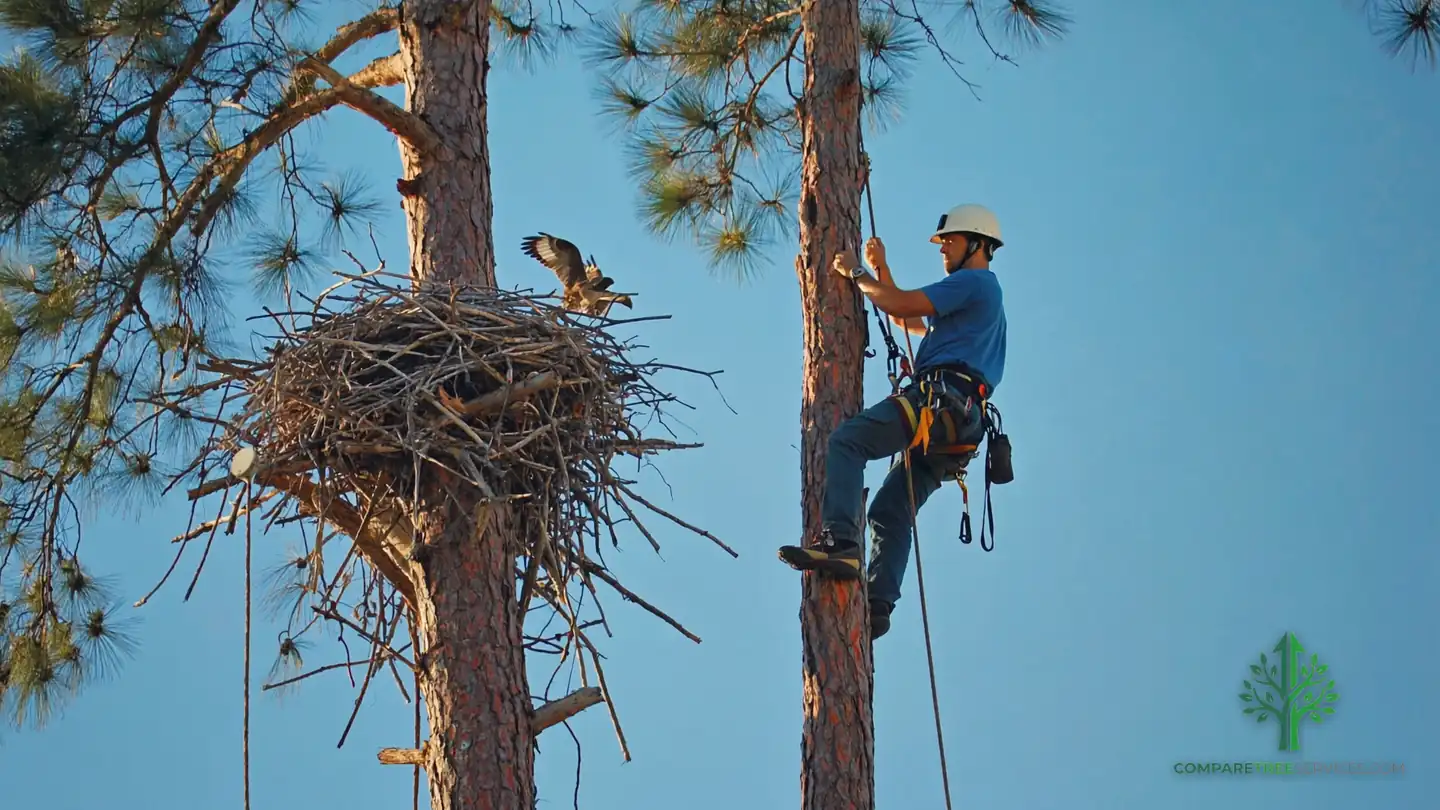
Tree Trimming Cost in 2026: What You’ll Actually Pay

Tree trimming cost comes down to three things: how tall the tree is, how much of the canopy needs work, and how easily a crew can reach it. A small ornamental in an open yard is a quick job; a 70-foot oak hanging over your roof is not. This guide breaks down real per-tree prices so you can tell a fair quote from a padded one.

Short answer: Most tree trimming jobs run $270 to $1,800 per tree, with a national average near $460 [S1][S4]. Height sets the baseline price, and access, meaning a canopy over a roof, fence, or power line, is what pushes a quote toward the top of the range [S3].

Tree Trimming Cost in 2026: What You’ll Actually Pay

Tree size

Height

Typical cost

What drives it

Small

Under 30 ft

$85 to $415

Ground or ladder work, fast cleanup [S2]

Medium

30 to 60 ft

$215 to $790

Climbing time, canopy spread [S2]

Large

Over 60 ft

$475 to $1,835

Bucket truck or full climb, rigging [S2]

Neglected or overgrown

Any

Up to $2,500+

Years of growth removed in one visit [S3]

Oak

Varies

$230 to $1,480

Dense hardwood, heavy limbs [S2]

Pine

Varies

$210 to $1,630

Height, sap on gear, needle cleanup [S2]

Palm

Varies

$100 to $1,330

Frond volume, trunk height [S2]

Tree Height Sets the Baseline

Height is the first number a crew looks at. LawnStarter puts typical tree trimming at $430 to $640 per tree, with small trees starting near $78 and large trees over 60 feet reaching $1,835 [S2]. Angi’s data lands in the same band: a $460 national average, with a floor around $75 for a small tree and $1,800 or more for a towering old oak [S1].

The jump between size brackets is steep because the work changes, not just the time. A tree under 30 feet gets trimmed from the ground or a ladder. Past 60 feet, the crew needs a climber or a bucket truck, and cut limbs get roped down instead of dropped.

Species and Canopy Shape Change the Price

Wood density and growth habit move the number at the same height. Oak runs $230 to $1,480 to trim because its dense limbs take longer to cut and lower safely [S2]. Pine runs $210 to $1,630, less because of hardness and more because of height and sticky cleanup [S2]; see our how to remove tree sap guide if a pine or maple trim left sap on your car, deck, or siding. A palm is its own category, usually priced by frond work rather than canopy shaping; see our palm tree trimming cost guide for that breakdown.

Fast-growing species also need trimming more often. A silver maple or willow on a two-year cycle costs more over a decade than a slow oak on a five-year cycle, even at a lower per-visit price.

Access and Site Conditions

An open-yard tree is the cheap version of every job. The price climbs when limbs hang over a roof, a fence, a driveway, or a neighbor’s property, because each cut has to be rigged and lowered instead of dropped. HomeGuide notes that the tallest, hardest-access trees are what push jobs past $2,500 [S3].

Anything within 10 feet of a power line is not a standard trim at all. Utility clearance work is restricted to line-clearance qualified crews, so expect a referral or a pass from a general tree service. Never let a bidder talk you into letting them “just reach in” near a line.

Tree Condition and Storm Damage

A healthy tree on a regular cycle trims fast. A neglected one, with years of deadwood, crossing limbs, and water sprouts, takes two or three times the labor, and quotes reflect that. HomeGuide’s data shows exceptionally overgrown or neglected trees reaching $2,500 or more for a single visit [S3].

Storm-cracked limbs or a half-failed canopy are a different job entirely. That’s hazard work, priced and scheduled differently; see our emergency tree removal cost guide for what urgent response actually costs, and get a hazard assessment before anyone climbs.

Where You Live Changes the Number

Regional labor rates move the average meaningfully. Angi’s city data shows trimming averaging $350 in Miami against $600 in Phoenix, nearly double for the same work [S1]. High-demand storm seasons tighten crew availability and firm up prices; slow winter months do the opposite in most markets.

Trimming several trees in one visit almost always beats scheduling them separately. Angi reports multi-tree discounts averaging about $100 off per tree, since the crew’s travel and setup get spread across the job [S1].

Want a number for your specific tree instead of a national range? Our tree trimming cost calculator builds a working estimate from height, species, and access.

What Add-On Services Cost

The trim itself is rarely the whole invoice. Here’s what typically gets added:

What Add-On Services Cost

Add-on

Typical price

Hauling branches and debris away

$50 to $90 [S5]

Chipping brush on site

$65 to $125 [S5]

Arborist consultation

$75 to $250 per hour [S6]

Tree health inspection

Free to $250 [S6]

Minimum call-out fee (small jobs)

$100 to $300 [S3]

City tree permit (protected species)

Set by your city; confirm before work

How to Save Money on Tree Trimming

Get three quotes; per-tree prices vary by hundreds of dollars between companies for identical work. Bundle every tree needing attention into one visit, since multi-tree discounts run about $100 per tree [S1]. Keep the wood and skip the $50 to $90 hauling fee if you can use it [S5].

Book in the dormant season when crews are slower and many species take cuts better anyway; our when to trim trees guide covers timing by species. And stay on a regular cycle. Two light trims a decade apart cost less than one heavy rescue of a neglected canopy, and the tree handles it better.

DIY vs. Hiring a Pro

Some trimming is fine to do yourself. Light shaping on a small ornamental, cuts you can make with both feet on the ground, and clearing pencil-thin suckers are all reasonable homeowner work with hand tools. Full DIY gear for that scale still adds up, as much as $600 if you’re starting from nothing [S2].

Everything else goes to a pro. Any cut that needs a chainsaw over your head, a ladder against a limb, or work near a service drop is professional territory, full stop. Overhead cuts and limb drops are two of the most common ways homeowners end up in emergency rooms, and a bad cut can also ruin the tree. Large limbs carry real weight and fall unpredictably.

Getting Quotes from Vetted Pros

Price is only half the quote. Ask every bidder for a certificate of insurance showing active general liability and workers’ comp, and ask whether an ISA Certified Arborist supervises the work; a company that trims to the ANSI A300 standard says so plainly and refuses to top a tree, the fastest way to spot a crew worth hiring.

Every company in our directory has already been through our screening process, so you’re comparing qualified crews instead of screening strangers yourself.

Key Takeaways

  • Most homeowners pay $270 to $1,800 to trim a tree, with the national average near $460 [S1][S4].
  • Height drives the baseline: trees over 60 feet run $475 to $1,835 per trim [S2].
  • Hard access (roofs, fences, power lines) pushes quotes toward the top of every range, per HomeGuide’s cost data [S3].
  • Multi-tree discounts average about $100 off per tree, so bundle the whole yard into one visit [S1].
  • Always confirm a certificate of insurance and ANSI A300 pruning practice before you sign.

## Frequently Asked Questions About Tree Trimming Costs ### How much does it cost to trim a large tree?

A large tree over 60 feet typically costs $475 to $1,835 to trim [S2]. Hard access, heavy deadwood, or rigging over a structure can push a single visit past $2,500 [S3]. Get an on-site quote for anything at this scale, since photos rarely capture access problems.

How often should trees be trimmed?

Most mature shade trees do well on a 3-to-5-year cycle, while fast growers like silver maple may need attention every 2 to 3 years. Young trees benefit from light structural work every few years so they never need expensive corrective cuts later. Timing by species matters; see our when to trim trees guide.

What’s the difference between tree trimming and tree pruning?

In everyday use the words overlap, but pros usually mean shaping and clearance when they say trimming, and health-focused cuts (removing dead, diseased, or structurally weak limbs) when they say pruning. The ANSI A300 standard governs how those cuts should be made either way. Most residential jobs include some of both.

Is it cheaper to trim a tree or remove it?

Trimming is almost always cheaper per visit: the average trim runs about $460 [S1], while the average removal lands near $750 [S1]. But a declining tree that needs constant work can cost more over ten years than taking it out once. Compare against our tree removal cost guide before committing either way.

Can I trim a tree myself?

Ground-level cuts on a small ornamental with hand pruners or loppers are reasonable DIY work. Anything requiring a chainsaw overhead, a ladder, climbing, or work near a power line belongs to a professional crew. The money you save on a small job disappears fast against one fall or one dropped limb on a roof.

Do tree trimming quotes include debris hauling?

Not always, and it’s worth asking directly. Hauling typically adds $50 to $90 and on-site chipping runs $65 to $125 if they’re billed separately [S5]. Some companies fold cleanup into the base price, which can make a slightly higher quote the better deal.

What a Qualified Crew Brings

A trimming crew worth hiring looks different from a guy with a chainsaw and a ladder. Insurance is the first thing to check: general liability and workers’ comp both current, backed by a real certificate, not a verbal promise. The lead should hold an ISA Certified Arborist credential or work under one, training to TCIA standards, following ANSI Z133 safety rules and OSHA’s guidance for chippers, chainsaws, and bucket trucks. Quotes should reference the tree’s DBH, diameter at breast height, and its height rather than a flat guess, and a good arborist will suggest crown reduction, cabling and bracing, or a lighter thinning when that solves the problem cheaper than heavy cutting. If a bidder proposes topping, thank them and move on; no crew following modern standards tops trees.

How We Price This Guide

We build every cost guide from published pricing data, not guesses. This page draws on 6 sources, including Angi, LawnStarter, HomeGuide, and HomeAdvisor, cross-checked wherever they overlap. Where sources disagreed by more than a small margin, we showed the full range instead of picking one number. Last updated July 2026 and reviewed by the CompareTreeServices editorial team. Labor rates and seasonal demand shift these numbers, so treat every figure as a planning range, not a quote. See our full pricing methodology for how we vet sources, and our cost guides hub for every service we price.

It’s tempting to assume every trim costs about the same; it doesn’t. Tree trimming cost tracks height, canopy condition, and access more than anything else, so a small, open-yard tree should land under $400 while a tall one over a roof will not [S2]. Get two or three quotes from vetted crews and confirm insurance before anyone climbs.

About CompareTreeServices: CompareTreeServices is an American directory that tracks tree service companies nationwide, so you can compare vetted providers in your area before you call. See our stump removal and tree pruning guides, or find a pro in your city.

Sources

  1. [S1] How Much Does Tree Maintenance Cost? (2026 Data), Angi
  2. [S2] How Much Does Tree Trimming Cost in 2026?, LawnStarter
  3. [S3] How Much Does Tree Trimming Cost? (2026), HomeGuide
  4. [S4] How Much Does Tree Trimming Cost?, HomeAdvisor
  5. [S5] Pricing Guide: How Much Does Tree Removal Cost?, LawnStarter
  6. [S6] How Much Does an Arborist Cost in 2026?, LawnStarter