
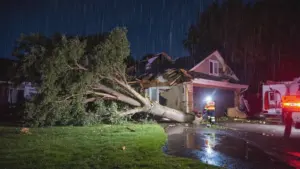
The 2026 Breakdown: Tree Fell on House
Short answer: Stay clear of the tree if it’s touching a power line or you smell gas, and call 911 if either applies. Photograph the damage from every angle before anyone moves the tree. Call your insurance company within a day or two, and get an emergency removal quote from an insured, tracked pro rather than the first person who knocks on your door.
The CompareTreeServices Take
The expensive mistake in tree work is almost never the hire, it is the wait. Trees fail on their own schedule; the homeowners who do well decide early, with a ranked shortlist already in hand.
| Step | What to do |
|---|---|
| 1. Safety check | Stay clear of downed power lines and gas smells; call 911 if either is present |
| 2. Document | Photos and video of the tree, the damage, and the surrounding area, before anything moves |
| 3. Prevent further damage | Tarp exposed openings if it’s safe to reach; leave structural work to a pro |
| 4. Call your insurer | Report the claim within 24 to 48 hours |
| 5. Get an emergency quote | From an insured, tracked crew, not a door-to-door solicitor |
| 6. Hold off on signing | Confirm insurance and scope in writing before agreeing to same-day work |
Table of Contents
Safety first: what to check before anyone gets close
Downed power lines are the single biggest risk after a tree falls on a house, and they’re not always obvious. Treat any line touching the tree, the house, or the ground as live, since a downed line can carry current without visible arcing or sound. The Electrical Safety Foundation International is direct on this: stay back, keep others back, and call your utility or 911 rather than attempting to move a line or branch yourself [S4].
Smell gas, hear hissing, or see visible structural collapse (a sagging roofline, a wall pulled away from the foundation), and the answer is the same: get everyone out and call 911 before doing anything else. Ready.gov’s severe weather guidance recommends exactly this sequence: life safety first, property assessment only once the immediate danger is confirmed clear [S5].
Document everything before you touch anything
Once it’s safe, photograph and video the tree, the point of impact, and the surrounding area from multiple angles before any cleanup starts or the tree gets moved. The Insurance Information Institute’s post-disaster guidance is consistent on this point: thorough documentation before repairs begin is what actually supports a smooth claim later [S1]. Keep a written list of anything visibly damaged inside the house too, not just the exterior.
Skipping this step is the mistake that costs people money weeks later, when an adjuster asks for photos that no longer exist because the tree was already hauled away.
Protecting the house until removal
If it’s safe to reach, a tarp over an exposed roof opening can limit water damage while you wait for a crew. Don’t climb onto a damaged roof or attempt to cut or move any part of the tree yourself; a tree resting against a structure can shift unpredictably, and that’s a job for an insured crew with the right rigging, not a homeowner with a chainsaw.
Calling your insurance company
Report the claim to your insurer within a day or two of the damage. Homeowners insurance typically covers tree removal and structural repair when a storm or other covered event drops a tree on your house, though coverage details vary by policy [S2]. See does insurance cover tree removal for the full breakdown of what’s typically covered and what isn’t.
Who is responsible when a tree falls on a house
Responsibility depends on whose tree it was, whether it was already a known hazard, and your state’s specific rules, so treat this as general orientation rather than a final answer for your situation. The Insurance Information Institute frames the coverage side plainly: your own homeowners policy pays out no matter who owned the tree that hit your house, but that same source is clear that poor tree maintenance isn’t covered, so a known, neglected hazard can undercut a claim [S3]. See hazardous tree removal: what qualifies and who pays for the fuller explanation of that distinction. If the tree that came down was growing on or near the property line, ownership itself can be disputed separately from the insurance question; our who owns a tree on the property line guide covers how that gets sorted out.
Getting emergency and downed tree removal
Get at least one quote from a tracked, insured crew before agreeing to same-day work; a tree already down and off the house is not always the same urgency as one still hanging over a room people use. LawnStarter prices fallen or downed tree removal well below a standing removal on average [S6], since the hard part, getting the tree safely to the ground, is already done.
Storm-chasing contractors canvassing your street right after the damage deserve extra scrutiny; ask for a certificate of insurance and get the scope in writing before signing anything. See tree removal quote: how to get one and read the line items for exactly what a fair quote should include, and the emergency tree removal cost guide for what fast response typically runs.
Every pro in our directory has already been through our screening process, so the crew you call in a genuine emergency isn’t a gamble.
Key takeaways
- Check for downed power lines and gas smells first; call 911 if either is present before anyone goes near the tree [S4][S5].
- Photograph and video all the damage before any cleanup starts, since documentation is what supports your claim later [S1].
- Report the claim to your insurer within 24 to 48 hours; most policies cover storm-related tree damage to a covered structure [S2].
- Who is ultimately responsible depends on whose tree it was and whether it was a known hazard beforehand, and it varies by state [S3].
- Get a quote from a tracked, insured crew rather than the first door-to-door contractor after a storm.
Frequently asked questions
What should I do first if a tree fell on my house?
Check for immediate danger: downed power lines touching the tree or house, gas smells, or visible structural collapse. Call 911 if any of those apply. Once it’s safe, photograph the damage from multiple angles before anything gets moved or cleaned up [S1][S4].
Is it safe to go near a tree that fell on a power line?
No. Treat any line touching the tree, the house, or the ground as live, even if it looks harmless. The Electrical Safety Foundation International recommends staying back and calling your utility company or 911 rather than approaching it yourself [S4].
Does homeowners insurance cover a tree that fell on my house?
Usually, yes, when a storm or another covered event caused it, though the specifics depend on your policy. See does insurance cover tree removal for a full breakdown of what’s typically included [S2].
Who is responsible when a tree falls on a house?
It depends on whose tree it was, whether it was already a known hazard, and your state’s rules. On the coverage side, your own homeowners policy pays out no matter who owned the tree, but poor maintenance of a known hazard isn’t covered, which is where liability questions start [S3]. See hazardous tree removal for the fuller explanation.
How fast do I need to remove a tree that’s already fallen on my house?
Fast enough to stop further water or structural damage, but you still have time to get more than one quote and confirm insurance on the crew. A tarp over an exposed opening can buy some time while you compare bids rather than accepting the first door-to-door offer.
Should I sign with a contractor who shows up right after the storm?
Be cautious. Storm-chasing contractors are a documented pattern after major weather events, and they’re frequently unlicensed or uninsured. Ask for a certificate of insurance and a written scope of work before agreeing to anything, even in an emergency.
A downed tree job on a house usually calls for rigging or a crane-assisted removal to control how sections come off the structure, plus a bucket truck for anything past ladder height. Crews haul debris through a wood chipper and price emergency work with an added premium on top of the standard per-inch or per-foot rate. Before anyone starts, confirm a certificate of insurance covering general liability and workers’ comp, check whether local rules require a city tree permit for the removal, and call 811 before any stump grinding or digging that follows. The work should follow ANSI Z133 safety rules and OSHA guidance, the same standards that apply to any tree crew, storm damage or not.
How we built this guide
Safety guidance comes from a utility-safety nonprofit and federal emergency-preparedness sources; insurance and claims steps are cross-checked against Insurance Information Institute publications. This guide cites 6 sources, , reviewed by the CompareTreeServices editorial team.
Tree fell on house is the search people make in a panic, but the order of operations afterward is what protects you: safety check, documentation, insurer, then a tracked removal crew. Rushing that order to get the tree off the roof faster is exactly how people lose money on a claim or end up with an uninsured stranger on their property.
Sources
- [S1] Insurance Information Institute, “Settling Insurance Claims After a Disaster”
- [S2] Insurance Information Institute, “If a Tree Falls on Your House, Are You Covered?”
- [S3] Insurance Information Institute, “If a Tree Falls on Your House, Are You Covered?”
- [S4] Electrical Safety Foundation International, “Downed Power Lines”
- [S5] Ready.gov, “Severe Weather”
- [S6] LawnStarter, “Pricing Guide: How Much Does Tree Removal Cost?”
About this guide
Researched and maintained by the CompareTreeServices editorial team, alongside the public Google Business data behind our tracked directory. How the numbers are built: methodology · listing standards.