
The 2026 Buyer’s Guide: Does Insurance Cover Tree Removal? The Real Answer
Short answer: Homeowners insurance typically covers tree removal when a storm or other covered peril drops a tree on your house, garage, or fence, usually up to $500 to $1,000 per incident [S1][S2]. It generally does not cover removing a healthy tree, or one that fell because it was already dead, rotting, or neglected [S1][S3].
The CompareTreeServices Take
Our position is boring and it works: verify insurance yourself, get scope in writing, and compare crews on demonstrated review volume rather than the loudest ad.
| Situation | Typically covered? | Why |
|---|---|---|
| Storm-felled tree lands on your house | Yes, usually | A covered peril damaged a covered structure |
| Neighbor’s tree falls on your house | Yes, through your own policy | Coverage follows the damaged property, not the tree’s owner |
| Healthy tree removed as a precaution | No | Preventive removal counts as maintenance |
| Dead or rotting tree falls from neglect | No | Insurers treat this as a maintenance failure |
| Fallen tree blocking a driveway, no damage | Sometimes | Some insurers cover debris blocking access |
Sources for this table: S1, S2 in the Sources list below.
Table of Contents
When your policy actually pays
Coverage turns on two things: a covered peril and a covered structure. Wind, hail, lightning, and vandalism typically qualify; a tree that simply keeled over from rot or old age typically doesn’t [S2]. Most policies cap debris removal at $500 to $1,000 per incident once those conditions are met, and separate sub-limits often apply to damaged landscaping itself: the Insurance Information Institute notes coverage for trees, shrubs, and plants is usually limited to about 5 percent of the insurance carried on the house, with a per-tree cap on top of that [S1].
Damage to the structure itself is what triggers the claim; the tree removal is a line item inside it, not a stand-alone benefit.
When it’s not covered
A tree that falls because nobody dealt with visible rot or decay is the most common denial. GEICO and the III both single out neglect as a maintenance issue, not an insurable loss, and a fallen tree that missed every structure on the property usually isn’t covered at all [S1][S2]. Wanting a large, healthy tree gone before it becomes a problem is a landscaping choice, not damage, so insurers don’t pay for it either.
If your tree is already dead and you’re trying to get ahead of the risk, see our dead tree removal cost guide; that job is on you, not your insurer.
Whose insurance pays when a neighbor’s tree falls on your house
This is the most common misunderstanding in the whole topic. If a neighbor’s tree falls on your house, your own homeowners policy pays for your damage and the removal, not your neighbor’s [S1][S2]. Afterward, your insurer may pursue your neighbor’s insurance company for reimbursement through a process called subrogation, which can put your deductible back in your pocket if it succeeds, but that happens behind the scenes after your claim is already paid. Insurance is only half the picture here; if the tree itself straddled the line or its ownership is disputed, see our who owns a tree on the property line guide for how that gets sorted separately from the claim.
How to file a tree damage claim
Document before you clean up. The National Association of Insurance Commissioners recommends photographing and listing every piece of damage before debris removal starts, then contacting your insurer with your policy number and a description of what happened [S4]. An adjuster inspects the damage at no cost to you, and payment typically arrives in stages rather than one lump sum [S4].
Keep receipts for anything you pay out of pocket in the meantime, and pull out your policy to check the actual deductible.
What’s safe to do yourself, and when to call a pro
Photographing damage, listing what broke, and calling your insurer are all safe to do yourself, and doing them before any cleanup starts protects your claim. Actually removing a tree that’s fallen on or near a structure isn’t a DIY job: unstable root plates, trapped tension in fallen limbs, and live wires nearby make this pro work, full stop.
Hire only an insured crew for the removal itself. If your contractor damages something further and carries no certificate of insurance, that cost lands back on you, not your insurance company. See our guide to choosing a tree service for what to verify before you sign a work order.
Every pro in our directory has cleared our listing checks process, so the crew handling your claim work is already carrying real coverage.
Key takeaways
- Homeowners insurance typically covers tree removal only when a covered peril drops the tree on a covered structure [S1][S2].
- Coverage is usually capped around $500 to $1,000 per incident, with a separate sub-limit on landscaping [S1].
- A neighbor’s tree falling on your house is covered by your own policy first, not theirs [S1][S2].
- Removing a healthy tree, or one that fell from neglect, is not a covered expense in most policies [S1][S2][S3].
- Photograph and document damage before cleanup starts; it’s the single biggest factor in a smooth claim [S4].
Frequently asked questions
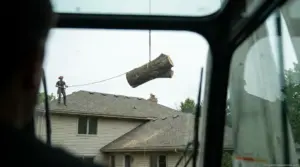
Does homeowners insurance cover tree removal?
Only under specific conditions. Most policies cover removal when a covered peril, like wind or lightning, brings a tree down onto a covered structure, generally up to $500 to $1,000 [S1][S2]. Removing a healthy tree or one that fell from neglect is typically excluded.
What if a tree falls but doesn’t hit anything?
Coverage is limited. Most insurers don’t pay to remove a tree that fell without damaging a covered structure, though some make an exception if it’s blocking a driveway or an accessibility ramp [S1]. Check your specific policy language, since insurers vary here.
Who pays if my neighbor’s tree falls on my house?
Your own insurance does, in almost every case. Coverage follows the damaged property, so you file with your insurer, not your neighbor’s [S1][S2]. Your insurer may later seek reimbursement from your neighbor’s policy through subrogation, but that doesn’t change who you call first.
Is a dead or rotting tree covered if it falls?
Usually not. Insurers treat a tree that falls due to rot, decay, or long-term neglect as a maintenance failure rather than a covered peril [S1][S2]. If you already know a tree is dead, removing it proactively is on you; see our tree removal permit guide if the tree is large enough to need one first.
How much of the removal cost will insurance actually pay?
Typically $500 to $1,000 per incident, though the exact number depends on your insurer and policy [S1][S2]. Get a written quote for the full job and check it against your declarations page; the whole cost isn’t automatically covered. See our tree removal cost guide for realistic pricing.
What should I do right after a tree falls on my property?
Photograph and list the damage before any cleanup, then call your insurer with your policy number and a description of what happened [S4]. If the tree is blocking an exit or threatening further damage, safety comes first; our storm damage tree cleanup guide covers the full sequence.
Coverage language differs by carrier and by state, and the exact dollar figures for debris removal, landscaping sub-limits, and deductibles all vary the same way. What stays constant is the underlying logic: a covered peril plus damage to a covered structure is what triggers payment, not the tree itself, its size, or its species. A rotting oak and a storm-snapped pine get treated identically once neglect or a qualifying peril decides which side of that line they fall on.
How we built this guide
We built this guide from the Insurance Information Institute, insurer-published consumer pages, and the National Association of Insurance Commissioners, not secondhand summaries. This guide cites 4 sources, , reviewed by the CompareTreeServices editorial team. Policy language and coverage limits vary by carrier and by state, so confirm your own declarations page before assuming any figure here applies to you.
So does insurance cover tree removal at your address? Pull out your policy, check whether a covered peril caused the damage, and confirm whether a structure was actually hit. That’s the whole test insurers apply, and it’s the same test you should run before you assume either way.
Related reading: Do I Need an Arborist or a Tree Service?.
Sources
- [S1] If a Tree Falls on Your House, Are You Covered?, Insurance Information Institute
- [S2] Does Home Insurance Cover Fallen Trees?, Progressive
- [S3] Does Homeowners Insurance Cover Tree Removal?, GEICO
- [S4] What You Need to Know When Filing a Homeowners Claim, National Association of Insurance Commissioners
About this guide
Researched and maintained by the CompareTreeServices editorial team, alongside the public Google Business data behind our tracked directory. How the numbers are built: methodology · listing standards.